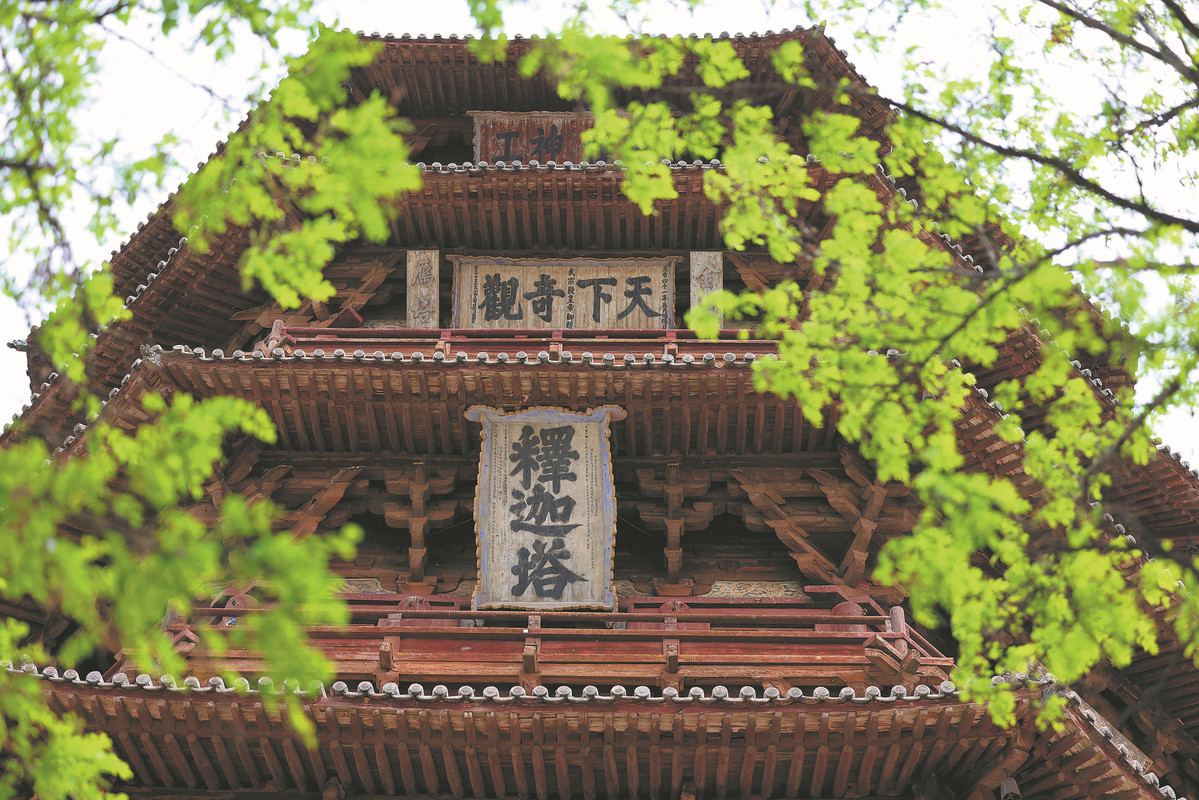
Wooden Pagoda in Yingxian, Shanxi
Introduction
The Wooden Pagoda in Yingxian, also known as the Sakyamuni Pagoda of Fogong Temple, is an iconic example of ancient Chinese wooden architecture. Located in Yingxian county, Shanxi province, this pagoda is a marvel of construction and design that has stood for nearly a millennium. The pagoda is renowned for its unique design, historical significance and as a symbol of the region's rich cultural heritage.
Historical Background
The Wooden Pagoda was constructed in 1056 during the Liao Dynasty (916-1125), under the reign of Emperor Daozong. It was commissioned by a Buddhist monk named Tianming and funded by Emperor Daozong to serve as a place of worship and to house sacred Buddhist relics. The pagoda was built in the architectural style typical of the Liao Dynasty, which favored wooden structures and intricate design.
Architectural Design
The pagoda stands at a height of approximately 67.31 meters (220.8 feet) and consists of nine stories, including four main floors and five pagoda sections. It is built entirely of wood, utilizing a joinery technique that does not rely on nails or metal fasteners, showcasing the advanced carpentry skills of ancient Chinese craftsmen. The structure is octagonal, a common shape for pagodas, and features intricately carved wooden brackets, beams and rafters. The design of the pagoda allows for flexibility and resilience, which has contributed to its survival through numerous earthquakes and weather conditions over the centuries.
Cultural Significance
The Wooden Pagoda is not only a significant architectural achievement but also a vital cultural and religious site. As a Buddhist pagoda, it was intended to serve as a place of meditation and spiritual reflection. It houses a statue of Buddha, along with various murals and sculptures that depict Buddhist themes. The pagoda is also an exemplary illustration of the fusion of Han and Liao cultural elements, reflecting the diverse cultural influences present in China during the time of its construction.
Preservation and Recognition
Over the years, the Wooden Pagoda has undergone several restoration efforts to preserve its structural integrity and cultural value. These efforts have focused on maintaining the original materials and construction techniques to the greatest extent possible. In recognition of its historical and architectural significance, the Wooden Pagoda of Yingxian county has been designated as a national treasure and receives protection under Chinese cultural heritage laws. It continues to attract scholars, historians, architects and tourists from around the world, eager to study and appreciate its timeless design and historical importance.
Influence on Tourism
The pagoda is a major tourist attraction in Shanxi province, drawing visitors who are interested in ancient architecture, history, and Buddhism. Its allure is enhanced by its association with renowned architects Liang Sicheng and Lin Huiyin, who conducted extensive surveys of ancient Chinese architecture, including the Wooden Pagoda. Their work has contributed to the global awareness and appreciation of the pagoda's architectural significance.








